

{"_title":"","_element_width":"","_element_width_tablet":"","_element_width_mobile":"","_position":"","_element_id":"","_css_classes":"","e_display_conditions":"","_element_cache":"","motion_fx_motion_fx_scrolling":"","motion_fx_translateY_effect":null,"motion_fx_translateY_direction":null,"motion_fx_translateY_speed":null,"motion_fx_translateY_affectedRange":null,"motion_fx_translateX_effect":null,"motion_fx_translateX_direction":null,"motion_fx_translateX_speed":null,"motion_fx_translateX_affectedRange":null,"motion_fx_opacity_effect":null,"motion_fx_opacity_direction":null,"motion_fx_opacity_level":null,"motion_fx_opacity_range":null,"motion_fx_blur_effect":null,"motion_fx_blur_direction":null,"motion_fx_blur_level":null,"motion_fx_blur_range":null,"motion_fx_rotateZ_effect":null,"motion_fx_rotateZ_direction":null,"motion_fx_rotateZ_speed":null,"motion_fx_rotateZ_affectedRange":null,"motion_fx_scale_effect":null,"motion_fx_scale_direction":null,"motion_fx_scale_speed":null,"motion_fx_scale_range":null,"motion_fx_devices":null,"motion_fx_range":null,"motion_fx_motion_fx_mouse":"","motion_fx_mouseTrack_effect":null,"motion_fx_mouseTrack_direction":null,"motion_fx_mouseTrack_speed":null,"motion_fx_tilt_effect":null,"motion_fx_tilt_direction":null,"motion_fx_tilt_speed":null,"handle_motion_fx_asset_loading":"","sticky":"","sticky_on":null,"sticky_offset":null,"sticky_offset_tablet":null,"sticky_offset_mobile":null,"sticky_effects_offset":null,"sticky_effects_offset_tablet":null,"sticky_effects_offset_mobile":null,"sticky_anchor_link_offset":null,"sticky_anchor_link_offset_tablet":null,"sticky_anchor_link_offset_mobile":null,"sticky_parent":null,"_animation":"","_animation_tablet":"","_animation_mobile":"","animation_duration":null,"_animation_delay":null,"_transform_rotate_popover":"","_transform_rotateZ_effect":null,"_transform_rotateZ_effect_tablet":null,"_transform_rotateZ_effect_mobile":null,"_transform_rotate_3d":null,"_transform_rotateX_effect":null,"_transform_rotateX_effect_tablet":null,"_transform_rotateX_effect_mobile":null,"_transform_rotateY_effect":null,"_transform_rotateY_effect_tablet":null,"_transform_rotateY_effect_mobile":null,"_transform_perspective_effect":null,"_transform_perspective_effect_tablet":null,"_transform_perspective_effect_mobile":null,"_transform_translate_popover":"","_transform_translateX_effect":null,"_transform_translateX_effect_tablet":null,"_transform_translateX_effect_mobile":null,"_transform_translateY_effect":null,"_transform_translateY_effect_tablet":null,"_transform_translateY_effect_mobile":null,"_transform_scale_popover":"","_transform_keep_proportions":"yes","_transform_scale_effect":null,"_transform_scale_effect_tablet":null,"_transform_scale_effect_mobile":null,"_transform_scaleX_effect":null,"_transform_scaleX_effect_tablet":null,"_transform_scaleX_effect_mobile":null,"_transform_scaleY_effect":null,"_transform_scaleY_effect_tablet":null,"_transform_scaleY_effect_mobile":null,"_transform_skew_popover":"","_transform_skewX_effect":null,"_transform_skewX_effect_tablet":null,"_transform_skewX_effect_mobile":null,"_transform_skewY_effect":null,"_transform_skewY_effect_tablet":null,"_transform_skewY_effect_mobile":null,"_transform_flipX_effect":"","_transform_flipY_effect":"","_transform_rotate_popover_hover":"","_transform_rotateZ_effect_hover":null,"_transform_rotateZ_effect_hover_tablet":null,"_transform_rotateZ_effect_hover_mobile":null,"_transform_rotate_3d_hover":null,"_transform_rotateX_effect_hover":null,"_transform_rotateX_effect_hover_tablet":null,"_transform_rotateX_effect_hover_mobile":null,"_transform_rotateY_effect_hover":null,"_transform_rotateY_effect_hover_tablet":null,"_transform_rotateY_effect_hover_mobile":null,"_transform_perspective_effect_hover":null,"_transform_perspective_effect_hover_tablet":null,"_transform_perspective_effect_hover_mobile":null,"_transform_translate_popover_hover":"","_transform_translateX_effect_hover":null,"_transform_translateX_effect_hover_tablet":null,"_transform_translateX_effect_hover_mobile":null,"_transform_translateY_effect_hover":null,"_transform_translateY_effect_hover_tablet":null,"_transform_translateY_effect_hover_mobile":null,"_transform_scale_popover_hover":"","_transform_keep_proportions_hover":"yes","_transform_scale_effect_hover":null,"_transform_scale_effect_hover_tablet":null,"_transform_scale_effect_hover_mobile":null,"_transform_scaleX_effect_hover":null,"_transform_scaleX_effect_hover_tablet":null,"_transform_scaleX_effect_hover_mobile":null,"_transform_scaleY_effect_hover":null,"_transform_scaleY_effect_hover_tablet":null,"_transform_scaleY_effect_hover_mobile":null,"_transform_skew_popover_hover":"","_transform_skewX_effect_hover":null,"_transform_skewX_effect_hover_tablet":null,"_transform_skewX_effect_hover_mobile":null,"_transform_skewY_effect_hover":null,"_transform_skewY_effect_hover_tablet":null,"_transform_skewY_effect_hover_mobile":null,"_transform_flipX_effect_hover":"","_transform_flipY_effect_hover":"","_background_color":null,"_background_color_b":null,"_background_image":null,"_background_image_tablet":null,"_background_image_mobile":null,"_background_video_link":null,"_background_video_start":null,"_background_video_end":null,"_background_play_once":null,"_background_play_on_mobile":null,"_background_privacy_mode":null,"_background_slideshow_gallery":null,"_background_slideshow_loop":null,"_background_slideshow_slide_duration":null,"_background_slideshow_slide_transition":null,"_background_slideshow_transition_duration":null,"_background_slideshow_lazyload":null,"_background_slideshow_ken_burns":null,"_background_slideshow_ken_burns_zoom_direction":null,"_background_hover_color":null,"_background_hover_color_b":null,"_background_hover_image":null,"_background_hover_image_tablet":null,"_background_hover_image_mobile":null,"_background_hover_video_link":null,"_background_hover_video_start":null,"_background_hover_video_end":null,"_background_hover_play_once":null,"_background_hover_play_on_mobile":null,"_background_hover_privacy_mode":null,"_background_hover_slideshow_gallery":null,"_background_hover_slideshow_loop":null,"_background_hover_slideshow_slide_duration":null,"_background_hover_slideshow_slide_transition":null,"_background_hover_slideshow_transition_duration":null,"_background_hover_slideshow_lazyload":null,"_background_hover_slideshow_ken_burns":null,"_background_hover_slideshow_ken_burns_zoom_direction":null,"_mask_switch":"","hide_desktop":"","hide_tablet":"","hide_mobile":"","_attributes":"","post_id":2994}
Veterans & Military Assistance Fund
The Veterans and Military Assistance Fund supports highly-rated nonprofits providing critical services to U.S. veterans, including mental health care, career readiness, and substance abuse treatment. Prioritizing evidence-based programs with proven outcomes, this fund ensures impactful, long-term benefits for veterans and strengthens community resilience through dedicated support.
Veterans in the United States face unique challenges resulting from their military service. With experiences that differ across service eras, demographics, and geographic regions, veterans often require tailored, evidence-based support to address issues like mental health, homelessness, and career readiness. This review synthesizes insights from multiple comprehensive studies to provide a clear picture of the current state of veterans, the challenges they face, and the most effective programs designed to support them. By understanding these factors, we can effectively guide funding toward impactful interventions that meet veterans’ diverse needs.
The Current State of Veterans in the U.S.
As of 2023, approximately 19 million veterans live in the United States, making up about 7% of the adult population. Veterans represent a diverse cross-section of society, encompassing various service eras and demographics. Post-9/11 veterans, who constitute about 25% of the veteran population, face distinct needs, particularly around PTSD and traumatic brain injuries (National Academies of Sciences, Engineering, and Medicine 7; RAND Corporation, The Role, Effectiveness, and Sustainability 3).
The veteran population is also evolving demographically, with women expected to comprise nearly 20% of veterans within the next decade. Racial and ethnic minorities represent around 23% of veterans, while geographic disparities in service access affect rural and tribal veterans who often experience barriers to healthcare and social services (Mission Roll Call, The State of Military Families 10; Pew Research Center 13). Addressing the needs of such a diverse population requires interventions sensitive to these demographic and situational differences.
Major Challenges Facing Veterans
Mental Health and PTSD
PTSD impacts roughly 11-20% of veterans who served in Iraq and Afghanistan, with treatment dropout rates as high as 54% due to the challenges associated with traditional therapies (National Academies of Sciences, Engineering, and Medicine 7; Leighton et al. 4). Depression, anxiety, and other mental health issues are prevalent, particularly among veterans experiencing reintegration difficulties.
Substance Use and Dependence
Veterans with co-occurring PTSD and substance use disorders (SUDs) require targeted support. Approximately 20% of veterans with PTSD also face issues with substance abuse, primarily alcohol. Evidence suggests that group-based treatment modalities, such as Cognitive Behavioral Therapy (CBT) and Twelve-Step Facilitation (TSF), are particularly effective in helping veterans recover (Dice 6).
Economic Challenges and Employment Barriers
Veterans face economic challenges, with post-9/11 veterans experiencing slightly higher unemployment rates than the national average. Many veterans also report underemployment, where their civilian jobs don’t align with their military skills. Organizations offering tailored job training and career counseling have shown a 25% improvement in job placement rates among veterans (RAND Corporation, Serving Our Post-9/11 Veterans 16; U.S. Department of Veterans Affairs 8).
Barriers to Healthcare Access
Many veterans, especially those in rural or tribal areas, face difficulties accessing healthcare due to long distances from VA facilities, complex bureaucratic processes, and cultural barriers. Tribal veterans, in particular, encounter additional obstacles related to geographic isolation and limited resources (Mission Roll Call, The Unique Challenges of Tribal Veterans 11).
Homelessness
Veterans make up approximately 11% of the homeless adult population in the U.S. Contributing factors include mental health issues, economic instability, and lack of a social safety net. Estimates from 2023 indicate that around 37,000 veterans are homeless on any given night, highlighting the need for effective housing and support programs (National Alliance to End Homelessness 9).
Effective Programs Supporting Veterans
Effective support for veterans involves programs that address core challenges in mental health, substance use, and career readiness. Prioritizing programs that have demonstrated lasting effects in providing solutions will be essential. Key evidence-based programs are as follows:
Mental Health Group Therapy
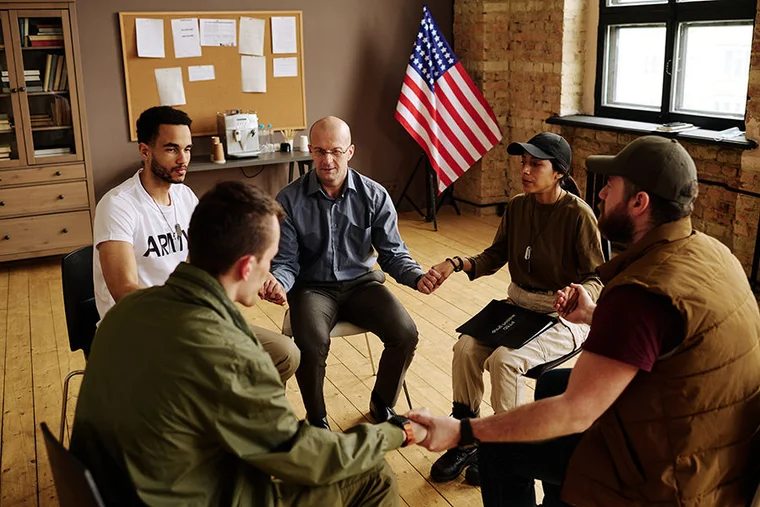
Group therapy programs, particularly those employing CBT and Twelve-Step Facilitation (TSF), have been effective in reducing PTSD and substance use symptoms among veterans. Group settings promote peer support and accountability, crucial for managing symptoms of PTSD and reducing relapse rates (Dice 6; National Academies of Sciences, Engineering, and Medicine 7).
Substance Use Disorder (SUD) Treatment
Integrated treatment for veterans dealing with both PTSD and SUDs has shown positive outcomes. Programs combining CBT, Motivational Interviewing (MI), and relapse prevention techniques are effective in reducing substance dependence and promoting social reintegration (RAND Corporation, Serving American Veterans 8).
Career Readiness and Employment Support
Programs focusing on career readiness help veterans translate military skills into civilian terms. Organizations like Hire Heroes USA provide job training, resume building, and partnerships with veteran-friendly employers, leading to a 25% increase in job placement and higher job satisfaction rates (RAND Corporation, The Role, Effectiveness, and Sustainability 3; Mission Roll Call, The State of Military Families 10).
Assistance Dogs for PTSD
Psychiatric assistance dogs have demonstrated effectiveness in reducing PTSD symptoms by as much as 30%, while improving veterans’ social interactions and overall quality of life. These dogs provide emotional stability and support, especially beneficial for veterans who may not fully respond to traditional therapies (Leighton et al. 4).
Why Veterans are a Priority for the Causeway Fund
Veteran support holds strong appeal for donors, as veterans are widely respected figures within American society, symbolizing service and sacrifice. This reverence translates into a high level of donor interest, with 76% of Americans identifying veteran support as a critical cause (Pew Research Center 13). For many donors, the opportunity to give back to those who have served aligns with deeply held values of patriotism and gratitude. Furthermore, veteran-focused initiatives provide tangible, measurable outcomes that appeal to the increasing donor emphasis on accountability and impact. Evidence-based programs addressing veteran mental health, employment, and substance abuse recovery demonstrate clear success, making these initiatives compelling choices for funders seeking impactful and accountable philanthropy (National Academies of Sciences, Engineering, and Medicine 7).
The benefits of supporting veterans extend beyond individual well-being, promoting long-term resilience within communities and contributing to societal stability. Effective programs that address veterans’ needs not only support these individuals directly but also strengthen the social fabric of the communities in which they live. Veterans who receive adequate mental health care, job training, and housing support are more likely to reintegrate successfully, fostering safer, more economically stable neighborhoods. By investing in veteran-focused initiatives, donors can drive lasting social impact that supports not only veterans but also the health, safety, and resilience of the broader community (National Alliance to End Homelessness 9).
Fund Criteria
To maximize the impact, the Causeway Fund for Veterans will prioritize organizations based on:
- Commitment to Transparency: Organizations have a 4 Star, 3 Beacon completion (minimum of one assessment for beacons with multiple assessments) on Charity Navigator, with a score of 95 or higher indicating a strong commitment to communicating their work, outcomes, and impact to donors and stakeholders
- Proven Effectiveness: Organizations that have shown a commitment to prioritizing proven, effective programs that address veterans the core challenges veterans face: mental and physical health, career readiness, and housing.
- Scalability and Program Size: Organizations with the capacity to scale their efforts and replicate successful models in other regions. We also prioritize organizations that have dedicated a large portion of their program efforts to these effective models.
References
- Leighton, Sarah C., et al. “Assistance Dogs for Military Veterans with PTSD: A Systematic Review, Meta-Analysis, and Meta-Synthesis.” PLOS ONE, 2022, doi:10.1371/journal.pone.0274960.
- National Academies of Sciences, Engineering, and Medicine. Evaluation of the Department of Veterans Affairs Mental Health Services. National Academies Press, 2018.
- RAND Corporation. The Role, Effectiveness, and Sustainability of Nonprofit Organizations That Provide Employment Support for Veterans. 2024.
- “What Are the Biggest Problems Facing Veterans Returning Home from Conflict?” The Science Behind It, 2024.
- U.S. Department of Veterans Affairs. Returning Home from Iraq and Afghanistan: Assessment of Readjustment Needs of Veterans, Service Members, and Their Families. Institute of Medicine, 2013.
- Dice, Robert T. A Meta-Analysis of Group Treatment Outcomes for Veterans with Substance Use Disorders. Old Dominion University, 2020.
- National Alliance to End Homelessness. State of Homelessness: 2023 Edition. 2023.
- “Serving American Veterans: A Review and Analysis of Gaps in Service.” RAND Corporation, 2023.
- Mission Roll Call. The Unique Challenges of Tribal Veterans. 2024.
- Mission Roll Call. The State of Military Families [2024]. 2024.
- Pew Research Center. The Views and Experiences of U.S. Veterans: 9 Key Findings. 2023.
- “Engaging Veterans in Evidence-Based Programs.” National Veterans Federation, 2024.
- “Together with Veterans: Rural Veteran Suicide Prevention Program.” U.S. Department of Veterans Affairs, 2023.
- “Seven Common Problems Veterans Face and How to Address Them.” Mission Roll Call, 2023.
- Mission Roll Call. Assistance Dogs for Military Veterans with PTSD: A Systematic Review. 2024.
- “Serving Our Post-9/11 Veterans: Leading Practices Among Nonprofit Organizations.” RAND Corporation, 2024.